The Metals Company (TMC) just cleared its final US regulatory hurdle to start mining 65,000 km² of untouched Pacific seafloor, a stretch of ocean holding one of the densest concentrations of undiscovered species on the planet. It did not wait for the international body meant to govern the deep sea. It used an obscure 1980 US law instead, and in May 2026 NOAA signed off.
TMC's US subsidiary filed a consolidated application for an exploration licence plus a commercial recovery permit covering
~65,000 km² of the Clarion-Clipperton Zone (CCZ), the Pacific abyssal plain between Hawaii and Mexico. NOAA found it in "substantial compliance" in March 2026, then "full compliance" in May 2026, moving it into certification. TMC expects a final permit decision
before the end of Q1 2027 (
eco Magazine;
TMC investor release).
TMC is routing around the
International Seabed Authority (ISA), the body 170+ countries rely on to govern the deep sea, by using the US
1980 Deep Seabed Hard Mineral Resources Act, since the US was never a party to the ISA ([Federal Register, Dec 2025](
https://www.federalregister.gov/documents/2025/12/23/2025-[code postal]/deep-seabed-mining-notice-of-receipt-of-applications-for-deep-seabed-mining-exploration-licenses-and)).
While TMC advances outside the ISA, the ISA itself is meeting in Kingston, Jamaica right now (
13-24 July 2026) to negotiate the "Mining Code" that would govern commercial extraction everywhere else. Its March 2026 session ended with
no finalised code and no exploitation approved (
IISD summary).
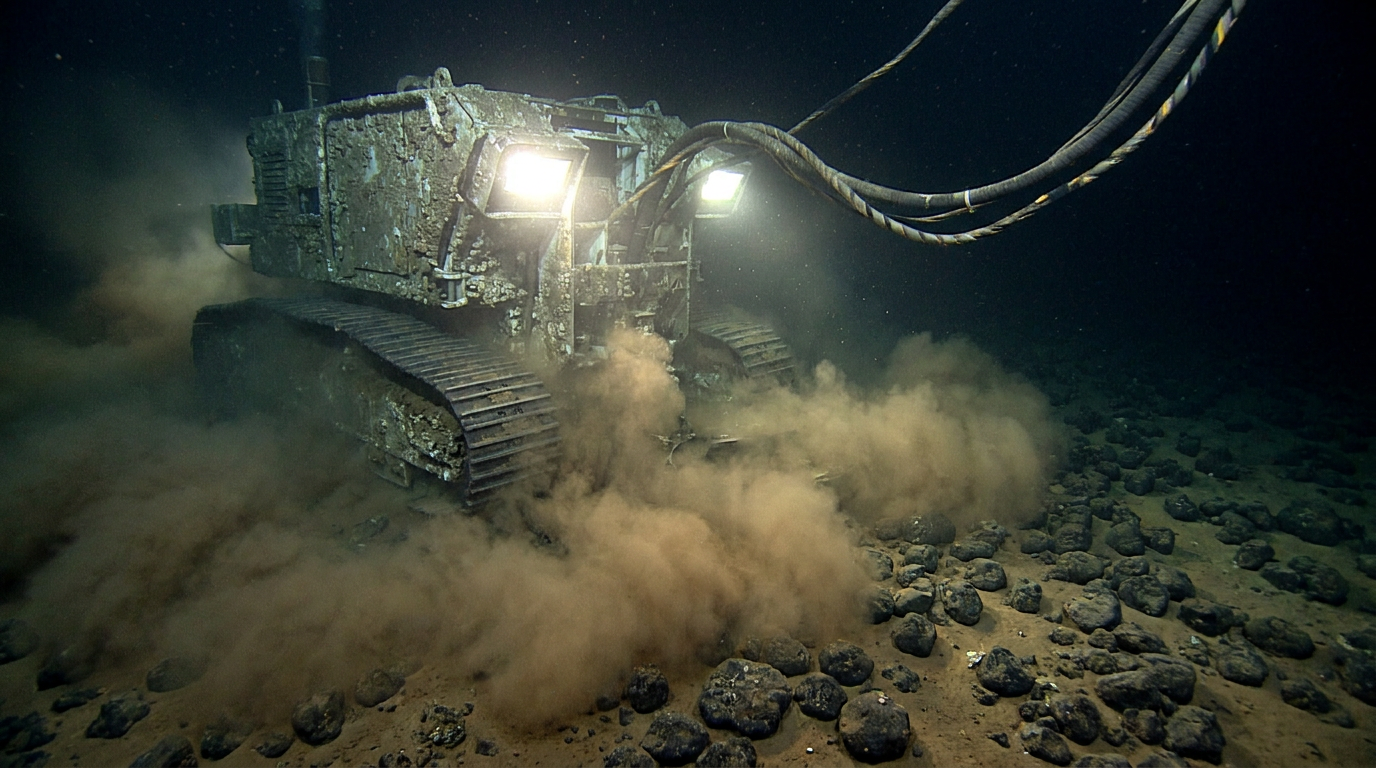
31 exploration contracts already cover parts of the CCZ; a single nodule-mining operation strips roughly
8,000-9,000 km² of seabed over a 30-year licence, and the sediment plumes it kicks up can travel
tens to hundreds of kilometres, smothering life far outside the mined area (
Deep Sea Conservation Coalition).
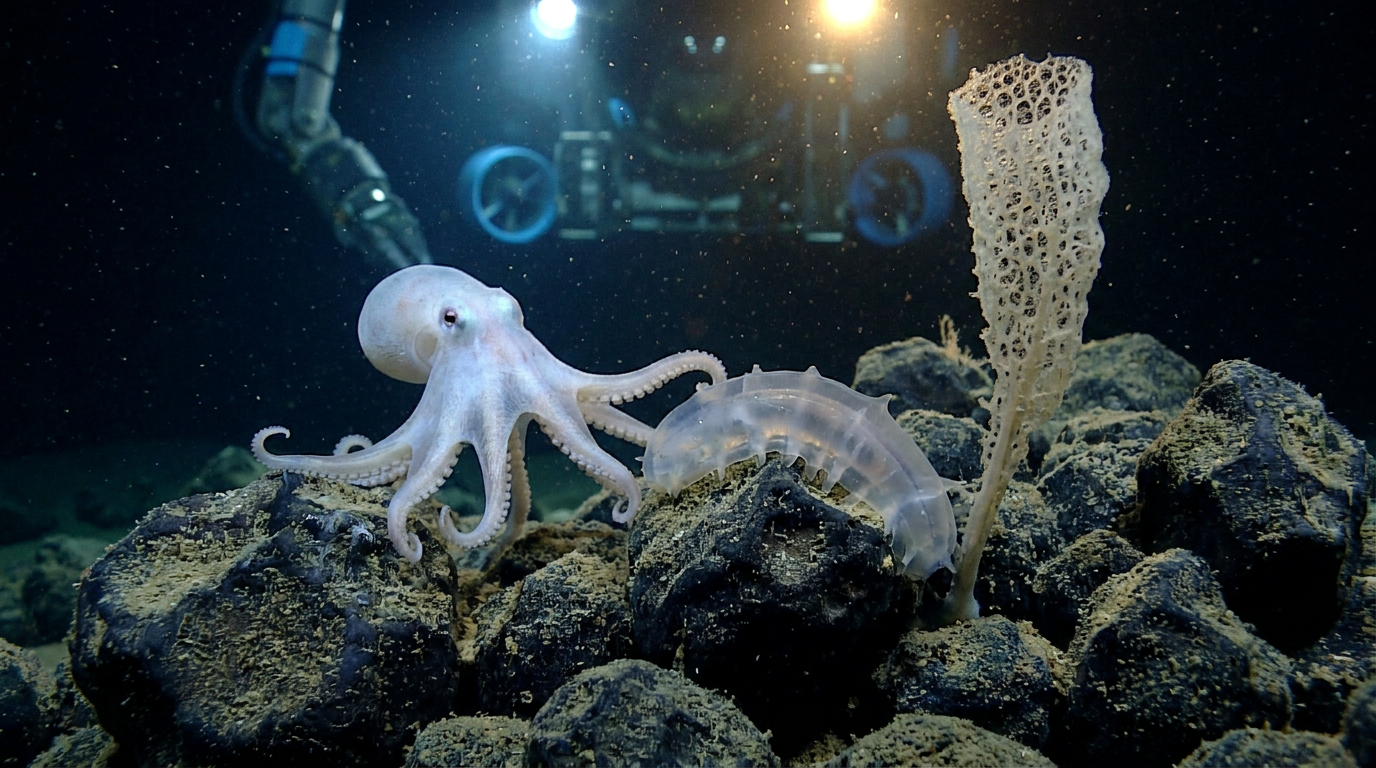
The CCZ is one of the least-catalogued ecosystems on Earth, and mining would hit it before science finishes describing it. A 2023 census recorded 5,578 species in the zone, of which only 436 are formally named, an estimated 88-92% new to science (Current Biology). Many depend on the nodules themselves as irreplaceable hard habitat, including the ghostly "Casper" octopus, which lays its eggs on sponge stalks anchored to nodules that take millions of years to form.
Worsening. TMC's unilateral US track is accelerating toward a permit while the ISA's international safeguards are still unresolved, meaning the first extraction path may open before any global rulebook is finished.
Share this brief. Almost no one outside ocean policy circles has heard of TMC or the CCZ, visibility is the first pressure point on a decision being made in a US regulatory process, not a public vote.
Support Oceana, which campaigns directly against opening new frontiers to extractive industry and pushes regulators to close exactly this kind of loophole.
oceana.org
Watch the ISA's Kingston session (through 24 July, Assembly 27-31 July) for its next public update, and follow the moratorium coalition of 40+ governments pushing for a precautionary pause.
40+ governments, including Mexico, Brazil and the UK, back a precautionary moratorium on deep-sea mining. The Center for Biological Diversity is urging Kingston delegates to hold the line against industry pressure. The Deep Sea Conservation Coalition is tracking the negotiations and flagging compliance concerns. Scientists at NH[personne] and the ISA's own "One Thousand Reasons" campaign are racing to name CCZ species before mining begins, to establish the biodiversity baseline extraction would erase.
INDEX: threat=deep-sea mining | zone=Clarion-Clipperton Zone (Pacific) | severity=serious | trend=worsening
One company just cleared its last hurdle to mine 65,000 km² of ocean floor no one has ever touched.
It didn't ask the international body that governs the deep sea. It used a 44-year-old US law instead.
The zone holds 5,578 known species. Over 88% of them have no name yet. Mining could start before science finishes describing them.
The company is The Metals Company. NOAA cleared it in May 2026. A permit could land by Q1 2027.
Share this, and support Oceana, they're fighting to close loopholes exactly like this one: oceana.org