Ocean threat brief - June 11, 2026Ocean threat brief - June 11, 2026
Caribbean coral collapse: renewed bleaching threat just months after record 2023–2025 mass mortality
The Caribbean is facing a potential fifth global mass bleaching event in mid-2026, less than a year after the end of the fourth global bleaching crisis that caused near-total mortality of branching corals across the region. Scientists express "dread" as El Niño-driven warming threatens reefs still recovering from the most devastating heat event ever documented.
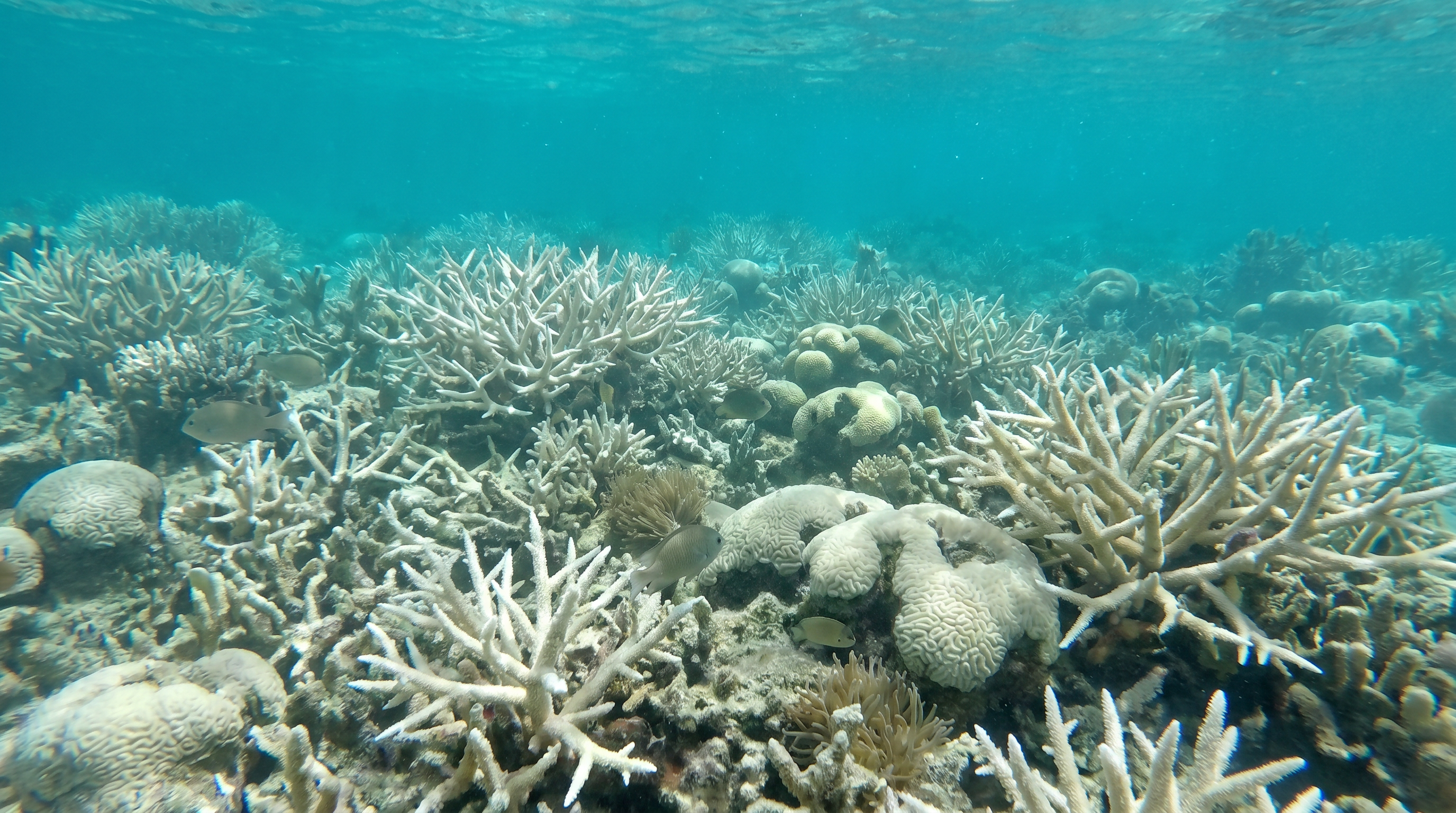
The Florida Keys, Bahamas, Cuba, Mexico (Yucatán and Campeche Bank), Belize, Honduras, Puerto Rico, U.S. Virgin Islands, and the wider Caribbean basin—essentially the entire Caribbean reef system stretching from southern Florida through the Mesoamerican Reef to the Lesser Antilles. NOAA Coral Reef Watch flagged "much of the north Pacific, including Hawai'i, plus Florida and the Caribbean" as high-risk zones for renewed bleaching later in summer 2026.
June 8, 2026 — NOAA Coral Reef Watch continues to track elevated heat stress across Florida Keys reef zones. The agency's June 2 global status update confirmed the fourth global coral bleaching event—which began in April 2024—likely ended in mid-2025, but warned that an incoming El Niño could trigger a fifth event within months.
coralreefwatch.noaa.gov
nesdis.noaa.gov
2023–2025 scale — The fourth global bleaching event exposed 84.4% of the world's coral reef area to bleaching-level heat stress between January 2023 and September 2025, with mass bleaching documented in at least 83 countries and territories.
Caribbean peak mortality — During the 2023 marine heatwave, water temperatures on Florida reefs reached 93°F (34°C)—far above the ~87°F (30.5°C) bleaching threshold—and remained elevated for months. Florida Fish and Wildlife Conservation Commission (FWC) monitoring found 100% of corals bleached on some reefs, with heat stress lasting two to three times longer than reefs had ever previously experienced.
Species-level collapse — FWC reported significant population declines in elkhorn (Acropora palmata) and staghorn (Acropora cervicornis) corals, plus mortality in brain, finger, and lettuce corals and widespread octocoral (soft coral) mortality from direct heat shock. A June 2026 PNAS exchange noted that branching corals suffered near-total mortality in 2023 across the Caribbean, an "unprecedented mortality" that some scientists describe as a shift toward "terminal decline."
May 22, 2026 forecast — Scientists warned that the return of a "potentially powerful" El Niño in 2026 could devastate reefs weakened by back-to-back bleaching rounds. Clint Oakley, coral scientist at Victoria University of Wellington, stated: "Every global coral bleaching event has been during an El Niño year... I feel dread, although not surprise."
June 3, 2026 NOAA warning — CBS News reported NOAA's official alert that El Niño's expected arrival "in the next few months" could trigger a fifth global mass bleaching event, marking another crisis barely a year after the last event's conclusion.
Coral species — Acropora staghorn and elkhorn corals—already critically endangered and keystone species for Caribbean reef structure—face local extinction after near-complete 2023 mortality. Brain corals (Diploria, Colpophyllia), finger corals (Porites), lettuce corals (Agaricia), and octocorals (soft corals including sea fans and sea whips) all suffered significant mortality or complete bleaching.
Ecosystem function — Caribbean reefs support more than 100 million people through fisheries, tourism, and coastal protection. A June 2026 study in The Conversation notes that Caribbean reefs "have been suffering from disease, pollution, overfishing and rising sea temperatures for decades, yet most have continued to grow—until now." The 2023–2024 heatwave marked a turning point where reef growth may have stopped.
Affected zones — The 2023 heatwave impacted the Dry Tortugas, Marquesas Keys, entire Florida Keys chain, southern Miami-Dade County reefs, and across the Bahamas, Cuba, Mexico, Belize, El Salvador, Costa Rica, Panama, Colombia, Puerto Rico, and U.S. Virgin Islands. Scientists warned in June 2026 that this could mark the sixth mass bleaching of Caribbean corals since 1995.
Dependent species — Caribbean spiny lobster, queen conch, parrotfish, groupers, snappers, juvenile fish nurseries, and more than 500 reef-associated fish species depend on live coral structure for shelter, feeding, and reproduction.
Worsening. The fourth global bleaching event (2023–2025) was the most severe on record, affecting 84.4% of global reef area, and the Caribbean suffered its longest and most intense marine heatwave ever documented—with heat stress two to three times higher than historical maximums.
The prognosis for mid-2026 is grim:
The Great Barrier Reef—often used as a global bellwether—has experienced six mass bleaching events since 2016, including mass bleaching in both 2024 and 2025. This accelerating frequency leaves no recovery time.
U.S. Coral Reef Task Force (USCRTF) — At its April–May 2026 meeting in Puerto Rico, the Task Force adopted "Guidance for Monitoring the Impacts of Heat Stress and Coral Bleaching Events: Standard Operating Procedures"—the first standardized federal protocol for tracking bleaching damage across U.S. reefs in real time. The agenda included watershed and coral reef restoration and a Caribbean–Pacific restoration exchange.
NOAA Coral Reef Watch — Maintains the global bleaching alert system. As of June 8, 2026, the program continues to publish near-real-time heat stress maps for the Florida Keys and Caribbean, now extending to Bleaching Alert Level 5 (previously capped at Level 2) to better capture extreme conditions.
The Nature Conservancy (TNC) — Established Coral Innovation Hubs in The Bahamas, U.S. Virgin Islands, and Dominican Republic to accelerate coral reproduction, reef recovery, and marine management across the region. These hubs focus on breeding heat-tolerant coral genotypes and scaling restoration.
Coral Reef Alliance (CORAL) — Announced a new Eastern Caribbean hub in 2026 to strengthen reef resilience and scale proven conservation solutions region-wide.
Global Coral Reef Monitoring Network (GCRMN) Caribbean node — Its December 2025 Caribbean report called for maintaining and enhancing coral reef monitoring with standardized regional protocols and for scalable reef restoration using thermotolerant genotypes and innovative finance. The report emphasized the urgent need for region-wide coordination after the 2023 collapse.
Central Caribbean Marine Institute (CCMI) — Running coral management and coral conservation training courses in Little Cayman in June 2026, building regional capacity to respond to bleaching events.
coralreefwatch.noaa.gov
nesdis.noaa.gov
coralreefwatch.noaa.gov
myfwc.com
theconversation.com
pnas.org
france24.com
cbsnews.com
barrierreef.org
taskforce.coralreef.noaa.gov
nature.org
coral.org
gcrmn.net
INDEX: threat=Caribbean coral bleaching | zone=Caribbean basin, Florida Keys | severity=critical | trend=worsening