Species spotlight - June 12, 2026Species spotlight - June 12, 2026
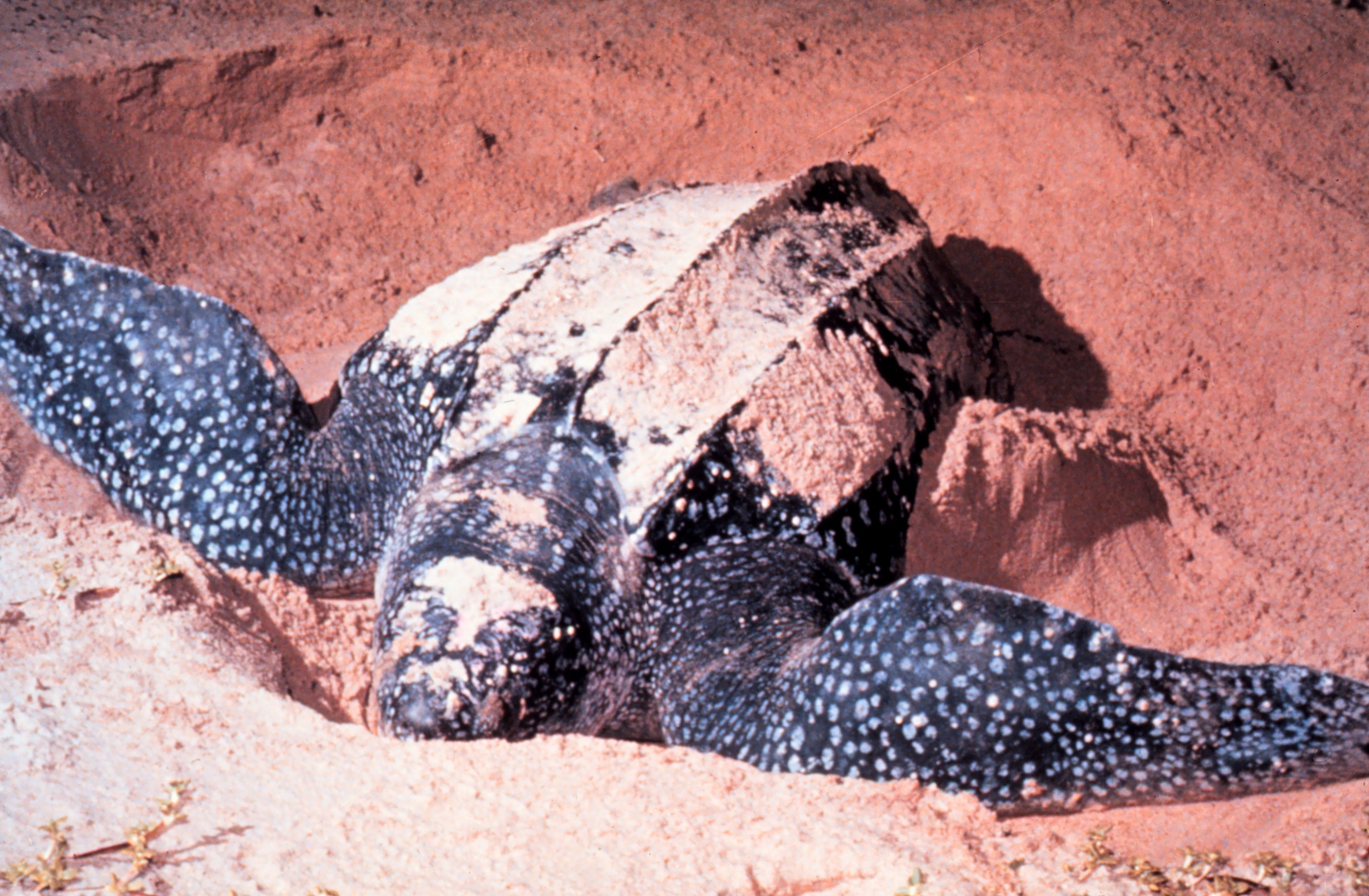 Photo : National Oceanic and Atmospheric Administration, NOAA / Wikimedia Commons — Public domain
Leatherback Sea Turtle
Dermochelys coriacea — the ocean's largest turtle, swimming 10,000 miles a year between nesting beaches and jellyfish-rich feeding grounds, now caught in a web of plastic, nets and warming seas.
Vulnerable (IUCN Red List, global assessment 2013) with a decreasing population trend. Several subpopulations face far graver threat: Critically Endangered in the East Pacific, West Pacific, Southwest Atlantic and Southwest Indian Ocean; Endangered in the Northwest Atlantic. Listed as Endangered under the U.S. Endangered Species Act.
Source: IUCN Marine Turtle Specialist Group, 2026; NOAA Fisheries.
Leatherbacks are the most widely distributed of all sea turtles, found in tropical, temperate and subpolar waters of the Atlantic, Pacific and Indian Oceans. Unlike other sea turtles, they can regulate their body temperature and tolerate cold water, foraging as far north as Alaska and as far south as New Zealand. Major nesting beaches remain in the Guianas (Suriname, French Guiana, Guyana), Indonesia, Trinidad, Gabon and Papua New Guinea. They migrate thousands of miles between nesting beaches and open-ocean foraging grounds rich in jellyfish.
Leatherbacks are apex predators of jellyfish and maintain balance in marine food webs. A single adult can consume up to 200 kg of jellyfish per day, controlling populations that compete with fish for plankton and clog fishing nets. Their deep-diving behaviour (up to 1,280 metres) and transoceanic migrations make them indicators of ocean health across vast ranges. As the last surviving member of a family that existed alongside the dinosaurs — unchanged for over 100 million years — their loss would represent the extinction of an entire evolutionary lineage.
Bycatch in fishing gear is the leading cause of leatherback mortality worldwide, with thousands drowned annually in gillnets, longlines and trawls.
Plastic pollution kills leatherbacks that mistake floating bags and debris for jellyfish; ingested plastic blocks their digestive systems and releases toxins.
Climate change is altering nesting beaches through rising temperatures (which skew sex ratios toward females), sea-level rise and increased storm intensity. Warming oceans also shift jellyfish distributions, forcing leatherbacks into longer, riskier migrations.
Egg poaching and direct harvest persist in parts of Indonesia, the Pacific islands and West Africa, where nesting females are killed for meat and eggs are taken for consumption.
Coastal development destroys nesting habitat through resort construction, artificial lighting (which disorients hatchlings) and beach erosion from hardened shorelines.
Cross-references: Plastic pollution, Ocean warming & acidification, Overfishing & IUU fishing (bycatch) — Threats index.
Turtle Foundation leads community-based conservation on Sipora and Nias islands (Indonesia), training local rangers to prevent poaching and protect the critically endangered Northeast Indian Ocean subpopulation (2025).
Loggerhead Marinelife Center (Florida, U.S.) has monitored and protected nesting leatherbacks for 26 years, tagging, tracking and securing critical nesting beaches along the Northwest Atlantic corridor.
NOAA Fisheries enforces U.S. Endangered Species Act protections, mandates turtle excluder devices (TEDs) in shrimp trawls, and coordinates international recovery plans.
The Leatherback Trust and WWF support nesting-beach patrols, community engagement and advocacy across the Caribbean, West Africa and the Pacific.
CITES Appendix I prohibits international trade in leatherbacks and their products; the Wider Caribbean is further protected under the SPAW Protocol.
Recent action includes Indonesia's expanded ranger training (2025), ongoing beach patrols in the Guianas to counter illegal fishing and poaching, and new satellite-tagging studies to map high-risk bycatch zones.
fisheries.noaa.gov
iucn-mtsg.org
seaturtlestatus.org
eocaconservation.org
marinelife.org
seaturtles.org